






Overview
- Design around the patient journey, not the organization chart behind it.
- Use agentic AI for bounded workflows while keeping patients and care teams in control.
- Treat security and integration as part of the experience, not an implementation detail.
- Build patient self-service that also reduces avoidable administrative work.
Modern patient engagement starts by replacing passive portals with journey-based experiences that help people take action, while carefully governed AI agents coordinate the work behind the interface.
Patient expectations have changed. People who manage appointments, medications, benefits, and care across consumer apps no longer accept a healthcare portal that is difficult to navigate or useful only as a document repository.
For health networks and digital health companies, the opportunity is bigger than a visual redesign. It is a chance to combine human-centered UX design, secure integration, and agentic workflows in one coherent patient experience.
Stop Building Portals. Start Building Patient Experiences.
A conventional patient portal is usually organized around internal systems: records live in one area, billing in another, and appointment tools somewhere else. A patient experience should instead be organized around what a person is trying to accomplish before, during, and after care.
That shift changes what the product team prioritizes. Every screen should reduce uncertainty, surface the next useful action, and make an important task easier to complete.
- Frictionless onboarding: Use secure identity verification and familiar biometric options, such as Face ID or Touch ID, where the platform supports them.
- Action-oriented dashboards: Prioritize the next meaningful task, whether that is joining a telehealth visit, completing a form, or following a medication reminder.
- Motivation designed into the experience: Apply progress cues, challenges, and other behavioral patterns when they support a real health goal rather than adding decoration.
When UX becomes an engagement strategy
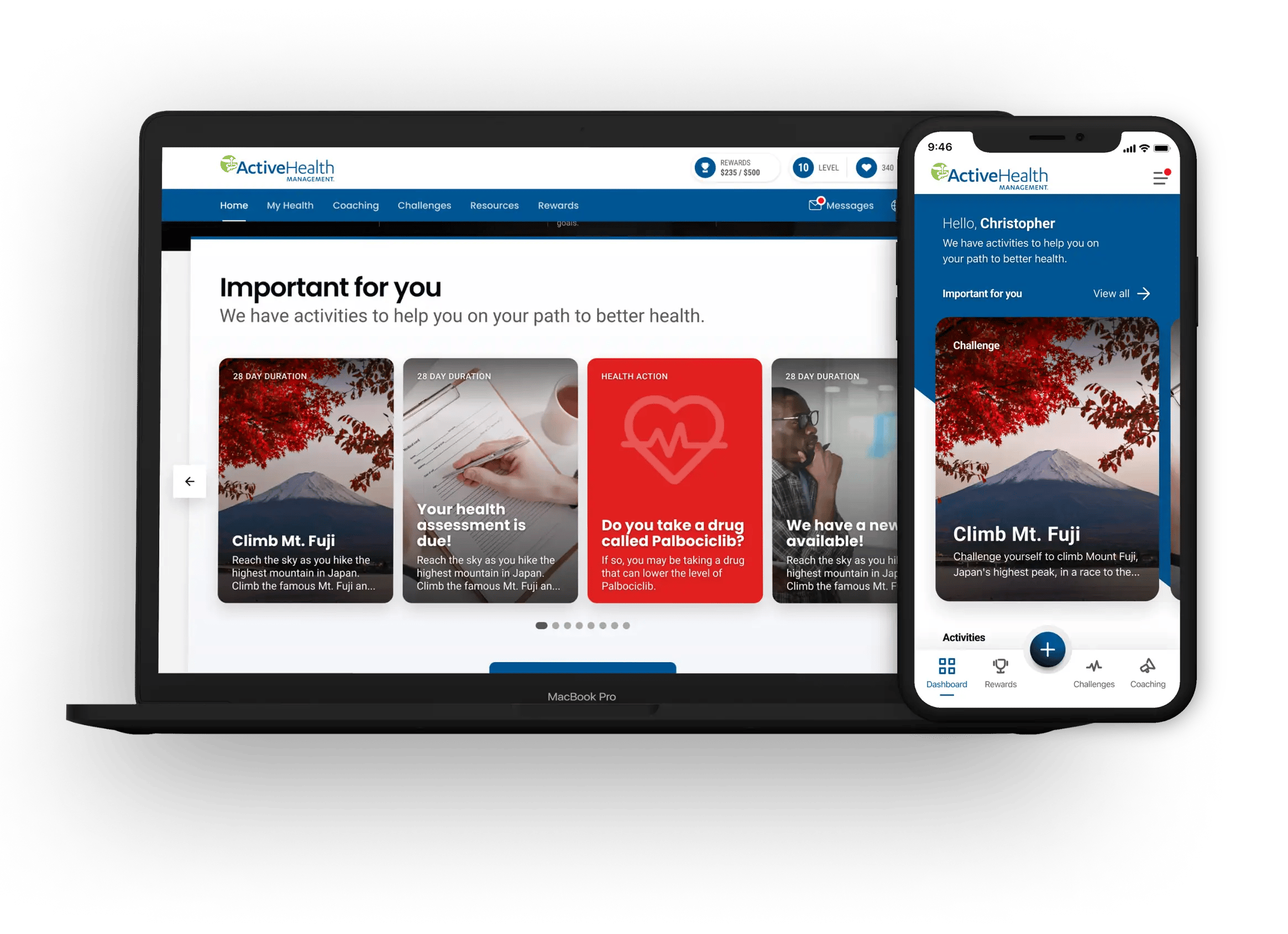
In one population health platform project, Seamgen helped translate a complex wellness program into a responsive, mobile-first experience with challenges, coaching, and clearer ways for members to participate. The lesson is not to gamify every clinical interaction; it is to design motivation around the behavior the program actually needs to support.
Move From Chatbots to Agentic Patient Workflows
A chatbot can answer a question. An agentic workflow can coordinate several approved actions across systems. For example, a patient looking for a specialist may need to filter by location and insurance, compare availability, reserve a time, and complete intake information. A well-designed agent can help orchestrate that sequence instead of forcing the patient to restart at every handoff.
The strongest use cases are bounded, observable, and reversible. Teams should define what the agent is allowed to do, which systems it may access, when it must ask for confirmation, and when the task needs a person. That is the practical difference between automation and a trustworthy agentic application.
Keep people in control
Patient-facing AI should support decisions and complete approved administrative work without presenting unverified medical advice as fact. Escalation paths, consent, auditability, and clinical governance belong in the workflow from the start.
Connect the Experience to Secure Healthcare Systems
A beautiful interface cannot create a coherent experience if appointment, eligibility, referral, identity, and clinical data remain disconnected. The product needs a secure integration layer that can translate a patient request into controlled actions across the systems responsible for fulfilling it.
That architecture has to account for privacy, cybersecurity, resilience, access controls, and operational visibility. In healthcare, those qualities are not separate from UX. They determine whether the experience is dependable enough for patients and staff to trust.

Modernizing fragmented healthcare systems
In a healthcare-network engagement, Seamgen helped replace fragmented tools with a secure portal and a modern cloud foundation. The broader lesson is to modernize the experience and its delivery practices together: integration, data, security, and DevSecOps all shape whether new patient workflows can scale safely.
Use Patient Self-Service to Reduce Administrative Load
A patient engagement application should create value on both sides of the interaction. When patients can upload an insurance card, complete intake, understand their next step, or route a non-urgent request digitally, staff spend less time on repeatable coordination and more time on work that requires judgment.
AI-assisted triage and message routing can extend that model, but success should be measured in operational terms: fewer avoidable calls, faster routing, higher task completion, and clear escalation when a digital workflow cannot safely continue.
- Start with one high-friction journey and map every patient, staff, system, and approval handoff.
- Separate the experience problem from the integration, security, and governance constraints underneath it.
- Choose a measurable first release before expanding the agent's responsibilities or the number of connected systems.
Healthcare organizations do not need another disconnected touchpoint. They need an engagement layer that makes important tasks easier for patients, reduces avoidable work for care teams, and introduces AI with the controls enterprise healthcare requires. That takes a partner with strength in both experience design and healthcare software development.
Frequently asked questions
Frequently Asked Questions
What is patient engagement in healthcare?
Patient engagement is the design of digital and human touchpoints that help people understand what to do next, complete important tasks, and participate in their care before, during, and after a visit.
How is a patient experience different from a traditional patient portal?
A traditional portal is often organized around internal systems such as records, billing, and appointments. A patient experience is organized around the person’s journey and brings the next useful action into a clearer, more coherent flow.
How can agentic AI improve patient engagement?
Agentic AI can coordinate approved administrative steps across systems, such as finding a specialist, checking eligibility, comparing availability, reserving a time, and completing intake. The workflow should request confirmation when needed and hand the task to a person when automation is not appropriate.
What should a patient engagement app include?
Useful patient engagement apps typically combine secure onboarding, an action-oriented dashboard, clear next steps, self-service tasks, and accessible paths to human support. Each feature should reduce uncertainty or make a meaningful task easier to complete.
How can healthcare organizations keep patient-facing AI safe?
Define bounded permissions, approved data access, confirmation points, consent requirements, audit trails, and human escalation paths before deployment. Patient-facing AI should support decisions and administrative work without presenting unverified medical advice as fact.
How does patient self-service reduce administrative workload?
Self-service moves repeatable tasks—such as insurance-card uploads, intake, appointment preparation, and non-urgent request routing—into clear digital workflows. That can reduce avoidable calls and allow staff to spend more time on work that requires judgment.


.png?width=640&height=360&name=25-new-noteworthy-connected-health-devices%20(1).png)